Хто зустрічався з Judith Exner?
John F. Kennedy від Judith Exner від ? до ?. Різниця у віці склала 16 роки 7 місяців 13 дні.
Sam Giancana від Judith Exner від ? до ?. Різниця у віці склала 25 роки 6 місяців 27 дні.
Френк Сінатра від Judith Exner від ? до ?. Різниця у віці склала 18 роки 0 місяців 30 дні.
Judith Exner
Judith Exner (January 11, 1934 – September 24, 1999) was an American woman who claimed to be a mistress of U.S. Senator, then U.S. president John F. Kennedy and Mafia leaders Sam Giancana and John Roselli. Some aspects of her claim of having known Kennedy have been verified by documents, phone records, and testimony. She was also known as Judith Campbell Exner, and Judith Campbell.
Детальніше...John F. Kennedy

Джон Фі́цджеральд Ке́ннеді (англ. John Fitzgerald Kennedy, відомий також як JFK; 29 травня 1917, Бруклайн, штат Массачусетс, США — 22 листопада 1963, Даллас, штат Техас) — американський політик, військовий ірландського походження, 35-й президент Сполучених Штатів Америки від Демократичної партії. Представник сімейства Кеннеді, син Джозефа Патріка Кеннеді та Рози Кеннеді, старший брат Роберта, Едварда, Розмарі, Юніс, Патриції та Джин Кеннеді.
Обраний до Палати представників 1946 року, через 6 років — до Сенату. 1961 року став другим наймолодшим президентом в історії Сполучених Штатів (після Теодора Рузвельта) та наймолодшим обраним на цю посаду. Перший римо-католик — президент США. Перший американський президент, що народився у XX столітті. Став єдиним президентом США, що отримав Пулітцерівську премію. Загинув унаслідок замаху на життя 22 листопада 1963 року.
Детальніше...Judith Exner
Sam Giancana
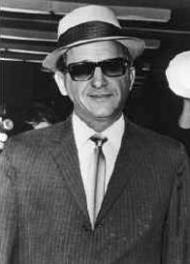
Salvatore "Mooney" Giancana ( JEE-ahn-KAH-nə; born Gilormo Giangana, Italian: [dʒiˈlɔrmo dʒaŋˈɡaːna]; May 24, 1908 – June 19, 1975) was an American mobster who was boss of the Chicago Outfit from 1957 to 1966.
Giancana was born in Chicago to Italian immigrant parents. He joined the 42 Gang as a teenager, developing a reputation in organized crime, which gained him the notice of the leaders of the Chicago Outfit, which he joined during the late 1930s. From the 1940s through the 1950s, he controlled illegal gambling, illegal liquor distribution, and political rackets in Louisiana. In the early 1940s, Giancana was involved in a takeover of Chicago's black American lottery payout system for the Outfit. In 1957, he became the boss of the Chicago Outfit.
According to some sources, Giancana and the Mafia were involved in John F. Kennedy's victory in the 1960 presidential election. During the 1960s, he was recruited by the Central Intelligence Agency (CIA) in a plot to assassinate Cuban leader Fidel Castro. Conspiracy theorists consider Giancana, along with Mafia leaders Santo Trafficante Jr. and Carlos Marcello, to be associated with the assassination of John F. Kennedy. In 1965, Giancana was convicted of contempt of court, serving one year in prison. After his release from prison, Giancana fled to Cuernavaca, Mexico. In 1974, he was deported to the United States, returning to Chicago. Giancana was murdered on June 19, 1975, at his home in Oak Park, Illinois, shortly before he was scheduled to appear before the Church Committee.
Детальніше...Judith Exner
Френк Сінатра

Francis Albert Sinatra (; December 12, 1915 – May 14, 1998) was an American singer and actor. Nicknamed the "Chairman of the Board" and "Ol' Blue Eyes", he is regarded as one of the most popular entertainers of the 20th century.
Born to Italian immigrants in Hoboken, New Jersey, Sinatra began his musical career in the swing era. He joined the Harry James band as the vocalist in 1939 before finding success as a solo artist after signing with Columbia Records four years later, becoming the idol of the "bobby soxers". In 1946, Sinatra released his debut album, The Voice of Frank Sinatra. He then signed with Capitol Records and released several albums with arrangements by Nelson Riddle, notably In the Wee Small Hours (1955) and Songs for Swingin' Lovers! (1956). In 1960, Sinatra left Capitol Records to start his own record label, Reprise Records, releasing a string of successful albums. He collaborated with Count Basie on Sinatra-Basie: An Historic Musical First (1962) and It Might as Well Be Swing (1964). In 1965, he recorded September of My Years and starred in the Emmy-winning television special Frank Sinatra: A Man and His Music. After releasing Sinatra at the Sands the following year, Sinatra recorded one of his most famous collaborations with Tom Jobim, Francis Albert Sinatra & Antonio Carlos Jobim. It was followed by 1968's Francis A. & Edward K. with Duke Ellington. Sinatra retired in 1971 following the release of "My Way" but came out of retirement two years later. He recorded several albums and released "New York, New York" in 1980. Sinatra is among the world's best-selling music artists, with an estimated 150 million record sales globally.
Sinatra also forged a highly successful acting career. After winning the Academy Award for Best Supporting Actor for From Here to Eternity (1953), he starred in The Man with the Golden Arm (1955) and The Manchurian Candidate (1962). Sinatra also appeared in musicals such as On the Town (1949); Guys and Dolls (1955); High Society (1956); and Pal Joey (1957), the last of which won him a Golden Globe Award. Toward the end of his career, Sinatra frequently played detectives, including the title character in Tony Rome (1967) and the titular The Detective (1968). He received the Golden Globe Cecil B. DeMille Award in 1971. Sinatra also directed the anti-war drama None but the Brave (1965). On television, The Frank Sinatra Show began on CBS in 1950, and Sinatra continued to make appearances on television throughout the 1950s and 1960s.
Sinatra was recognized at the Kennedy Center Honors in 1983, awarded the Presidential Medal of Freedom in 1985, and received the Congressional Gold Medal in 1997. He earned 11 Grammy Awards, including the Grammy Trustees Award, Grammy Legend Award, and the Grammy Lifetime Achievement Award. American music critic Robert Christgau called Sinatra "the greatest singer of the 20th century" and he continues to be regarded as an iconic figure.
Детальніше...