Хто зустрічався з Louis Philippe II, Duke of Orléans?
Grace Elliott від Louis Philippe II, Duke of Orléans від ? до ?.
Marguerite Françoise Bouvier de la Mothe de Cepoy від Louis Philippe II, Duke of Orléans від ? до ?.
Stéphanie Félicité Ducrest de Saint-Aubin de Genlis від Louis Philippe II, Duke of Orléans від до . Різниця у віці склала 1 роки 2 місяців 19 дні.
Louis Philippe II, Duke of Orléans
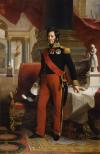
Louis Philippe II, Duke of Orléans (Louis Philippe Joseph; 13 April 1747 – 6 November 1793), was a French Prince of the Blood who supported the French Revolution.
Louis Philippe II was born at the Château de Saint-Cloud to Louis Philippe I, Duke of Chartres, and his wife, Louise Henriette de Bourbon-Conti. He was titled Duke of Montpensier at birth. When his grandfather Louis, Duke of Orléans, died in 1752, his father became the new Duke of Orléans and Louis Philippe II became Duke of Chartres. When his father died in 1785, he became Duke of Orléans and First Prince of the Blood. He was styled as Serene Highness (French: Son Altesse Sérénissime).
In 1792, during the Revolution, Louis Philippe changed his name to Philippe Égalité. He was a cousin of King Louis XVI and one of the wealthiest men in France. He actively supported the Revolution of 1789, and was a strong advocate for the elimination of the present absolute monarchy in favor of a constitutional monarchy. Égalité voted for the death of Louis XVI; however, he was himself guillotined in 1793 during the Reign of Terror. His son, also named Louis Philippe, became King of the French after the July Revolution of 1830. After Louis Philippe II, the term Orléanist came to be attached to the movement in France that favored a constitutional monarchy.
Детальніше...Grace Elliott

Grace Dalrymple Elliott (c. 1754 – 16 May 1823) was a Scottish courtesan, writer and spy resident in Paris during the French Revolution. She was an eyewitness to events detailed in her memoirs, Journal of my life during the French Revolution (Ma Vie sous la Révolution) published posthumously in 1859. She was mistress, first to the future George IV, by whom she is said to have borne an illegitimate daughter, and then to the Duke of Orléans. Elliott trafficked correspondence and helped condemned Royalists and members of the French nobility escape from the First French Republic during the Reign of Terror. She was arrested several times but managed to avoid the guillotine, and was released following the military coup that ended the Terror and resulted in the execution of Robespierre.
In the acclaimed but widely controversial 2001 film adaptation of her memoirs by French New Wave director Éric Rohmer as The Lady and the Duke, Grace Elliot was played by English actress Lucy Russell.
Детальніше...Louis Philippe II, Duke of Orléans
Marguerite Françoise Bouvier de la Mothe de Cepoy

Marguerite Françoise Bouvier de la Mothe de Cepoy (1767–1808), known as Countess de Buffon, was a French noble, known as the royal mistress of Louis Philippe II, Duke of Orléans from 1784 until 1793.
She was the daughter of marquis Guillaume François de Cepoy and Élisabeth Amaranthe Jogues de Martinville and married Count Georges Louis Marie Leclerc de Buffon (1764-1794) in 1784; the same year, she became the lover of Orléans, with whom she had a son, Count Victor du Buffon (1792-1812). During the Terror, she helped the legitimate sons of Orléans escape prison. In 1794, she divorced and emigrated to England, where she became a supporter of Louis Philippe.
Детальніше...Louis Philippe II, Duke of Orléans
Stéphanie Félicité Ducrest de Saint-Aubin de Genlis

Caroline-Stéphanie-Félicité, Madame de Genlis (25 January 1746 – 31 December 1830) was a French writer of the late 18th and early 19th century, known for her novels and theories of children's education. She is now best remembered for her journals and the historical perspective they provide on her life and times.
Детальніше...